


A shower is where your day begins and ends. It is a small but deeply personal space that deserves as much thought as any other room in your home. While people spend a lot of time picking out fixtures, vanities, and lighting, choosing the right shower tiles often gets rushed, and that is where costly mistakes happen.
The wrong shower tile can crack under steam pressure, grow mold within months, or turn dangerously slippery underfoot.
Before you browse tile collections or fall in love with a design, there are practical things you must check. This guide covers every important factor so you can walk into your tile selection with confidence and come home with a choice that holds up beautifully for years.

What Makes Shower Tiles Different from Regular Tiles?
A shower environment is one of the most demanding conditions any surface can face. Hot steam, daily water exposure, soap and chemical residue, repeated temperature shifts, and constant foot traffic all happen in a very confined space. A tile that looks perfect in a showroom may blister, stain, or crack once it meets real shower conditions.
This is why shower tiles are not just a design decision; they are a structural one. Getting the selection right from the beginning saves you from expensive re-tiling jobs, mold remediation, and safety hazards down the line.
What to Know Before Buying Shower Tiles
Unlike other rooms, showers demand tiles that balance beauty with performance. From moisture resistance to daily foot traffic, every detail counts. Evaluate these six essential factors before making your final tile selection.
1. Water Absorption and Porosity
Steam and water are everywhere in a shower. If a tile absorbs too much moisture through its body, it weakens internally over time. Grout lines suffer, the tile backing loosens, and mold finds its way in through the cracks.
The technical measure here is called the water absorption rate, and for shower tiles, it needs to be very low:
✔ Porcelain: Under 0.5% absorption, the gold standard for showers. Dense, hard, and virtually impermeable.
✔ Vitrified Tiles: 0.3–0.5% absorption, fired at high temperatures for excellent moisture resistance.
✔ Glazed Ceramic: 3–6% absorption; the glaze offers surface protection on walls, but these are not reliable for shower floors or steam showers.
✔ Natural Stone: Absorption varies widely by stone type. Marble, travertine, and slate all need professional-grade sealing before use in wet shower areas.

2. Slip Resistance (Safety Comes First)
Shower floors are one of the most common locations for household slip-and-fall injuries. When soap film, water, and a smooth tile surface combine, the result can be dangerous. Slip resistance is not optional for shower floors; it is non-negotiable.
Tiles are graded using an R-rating system based on ramp testing:
✔ R10: Acceptable for low-traffic residential shower floors with careful tile selection.
✔ R11: Recommended for most home showers, provides reliable grip underfoot.
✔ R12: Best for walk-in showers, wet rooms, or households with elderly family members.
✔ Surface texture matters too: Micro-textured, sandblasted, or structured matte surfaces grip wet feet far better than anything smooth.
Safe traction and great design can absolutely coexist; it simply requires choosing the right finish.
Note: What is an R-value slip rating for porcelain pavers? Discover how this classification system measures slip resistance and helps you choose safer outdoor flooring.
3. Tile Size and Grout Lines
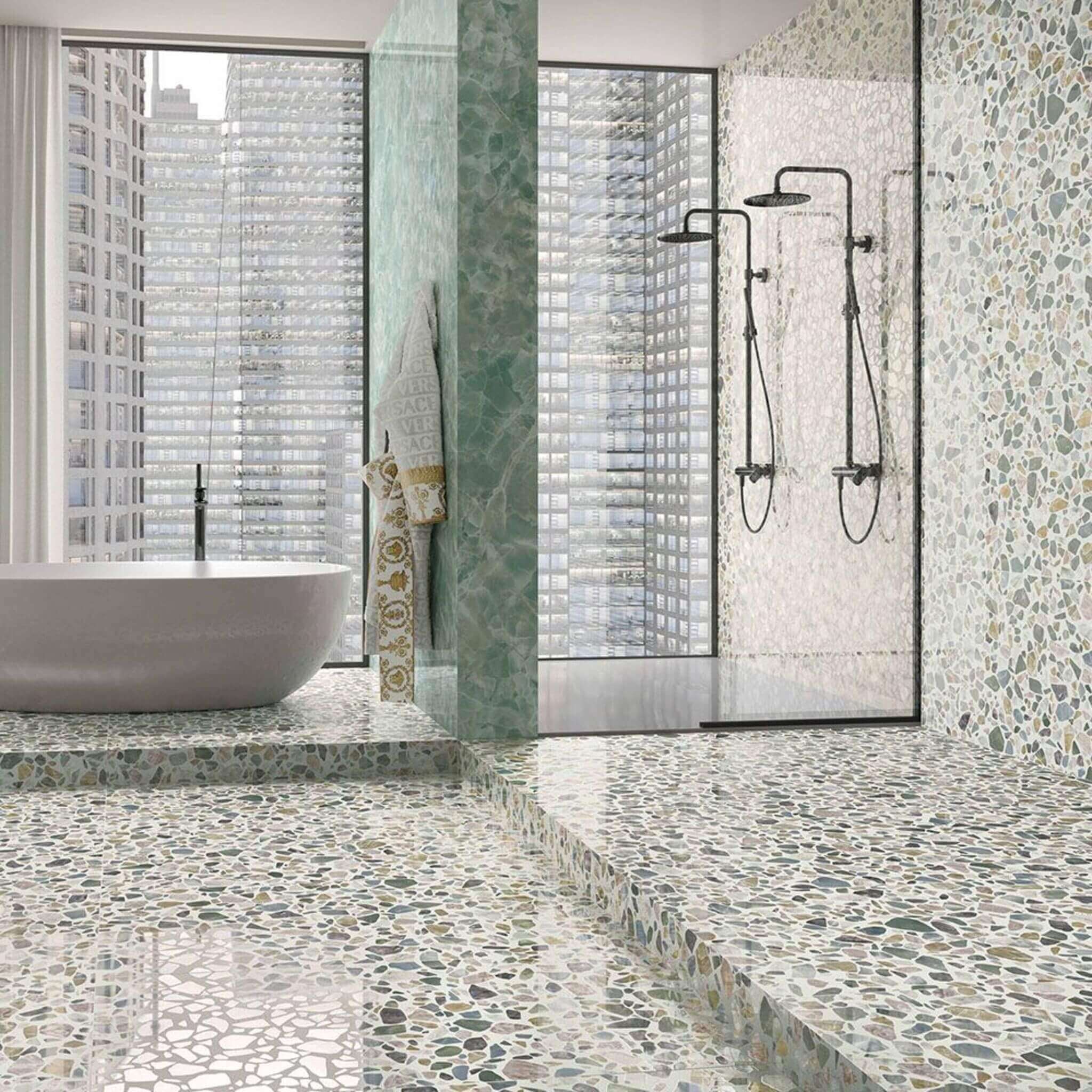
Tile size affects both how your shower looks and how easy it is to maintain. Large-format tiles on walls reduce the number of grout lines, which means fewer places for soap scum and mold to settle. On the floor, smaller tiles actually work in your favor because more grout lines mean better grip.
✔ Shower Walls Tile: Tiles from 12×24 inches upward create a clean, seamless, spa-like appearance. Large slabs with minimal joints are the modern preference.
✔ Shower Floors Tile: Mosaic tiles (1×1 to 4×4 inches) are practical and safe. They conform naturally to the curved drain slope and increase surface texture.
✔ Compact Showers: Medium formats like 6×6 or 8×8 inches keep the visual scale proportionate without making the space feel overloaded.
✔ Grout Width: Tighter grout lines look cleaner but require more precision during installation. Wider joints are more forgiving but need diligent sealing.
4. Steam Shower Compatibility
Steam showers create intense heat, pressure, and sustained moisture that standard tiles cannot always handle. Only fully vitrified or rectified porcelain tiles are suitable for steam environments. The tile must be rated for thermal shock to withstand rapid temperature changes without cracking.
The ceiling and walls both need complete tile coverage since steam rises and settles on every surface. Always install expansion joints to manage material movement caused by heat. Wrong tile selection in a steam shower leads to cracked tiles and grout failure within months.
5. Durability and PEI Rating
Shower tiles must withstand daily foot traffic, cleaning products, and constant moisture without chipping or wearing down. The PEI (Porcelain Enamel Institute) rating measures a tile’s resistance to surface abrasion and wear.
✔ PEI 3: Minimum requirement for residential shower floors with regular foot traffic.
✔ PEI 4: Ideal for most home showers, offers strong resistance to daily wear and cleaning.
✔ PEI 5: Best for heavy-use showers, providing maximum durability and scratch resistance.
✔ Shower Walls: Require lower PEI ratings since they face minimal physical contact compared to floors.
A higher PEI-rated tile means fewer replacements, lower maintenance costs, and a shower that stays attractive for years.
6. Maintenance and Cleaning Requirements
Each tile material has different upkeep needs. Porcelain and vitrified tiles require minimal effort; a weekly wipe-down keeps them looking fresh for years. Glazed ceramic is easy to clean, but grout needs periodic sealing.
Natural stone requires the most attention; seal it every 6 to 12 months and avoid acidic cleaners, as they can permanently damage the surface. Glass tiles are smooth and quick to wipe but show water spots easily. Choose a tile whose maintenance routine fits your lifestyle.
Note: Should you choose wood-look porcelain tiles for low-maintenance flooring? Discover the benefits of durable, easy-care flooring that complements modern lifestyles.
7. Choosing the Right Colors
Tile color sets the entire mood and feel of your shower. The right shades make the space feel larger, cleaner, and more inviting while complementing your fixtures, hardware, and overall bathroom design.
✔ Light Colors: White, ivory, or soft gray brighten the shower and make compact spaces feel more open and airy.
✔ Dark Colors: Charcoal, black, or deep green create a bold, dramatic, and spa-like atmosphere.
✔ Earthy and Neutral Tones: Warm beiges, taupes, and terracottas bring a natural, calming elegance to any shower.
✔ Stain-Friendly Shades: Medium tones and subtle textures hide soap residue, water spots, and everyday marks more effectively.
✔ Grout Color Coordination: Choose grout that complements or contrasts intentionally with your tile for a polished, finished look.

Related Articles:
Why Calacatta Viola Porcelain Tile Is Trending in 2026
What Are the Best Tiles for an Outdoor Staircase?
How Much Does It Cost to Tile a Bathroom Floor?
Matching Your Shower Tiles to Your Style
The shower can be the most visually striking room in a home when the bathroom shower tile is chosen thoughtfully. A large-format white or light stone-look porcelain creates a clean, airy, hotel-like atmosphere. Deep charcoal or slate-toned tiles in a walk-in shower feel bold and grounding. Warm terracotta or travertine-look finishes bring an earthy, Mediterranean warmth that never goes out of style.
MMG Tile & Stone offers an extensive range of shower tiles built for both performance and style. Whether you prefer a sleek modern look, a warm natural finish, or a bold statement design, every option is selected to handle real shower conditions, moisture, steam, and daily wear without compromising on beauty.
Join the MMG Trade Program today and unlock exclusive tile discounts!