

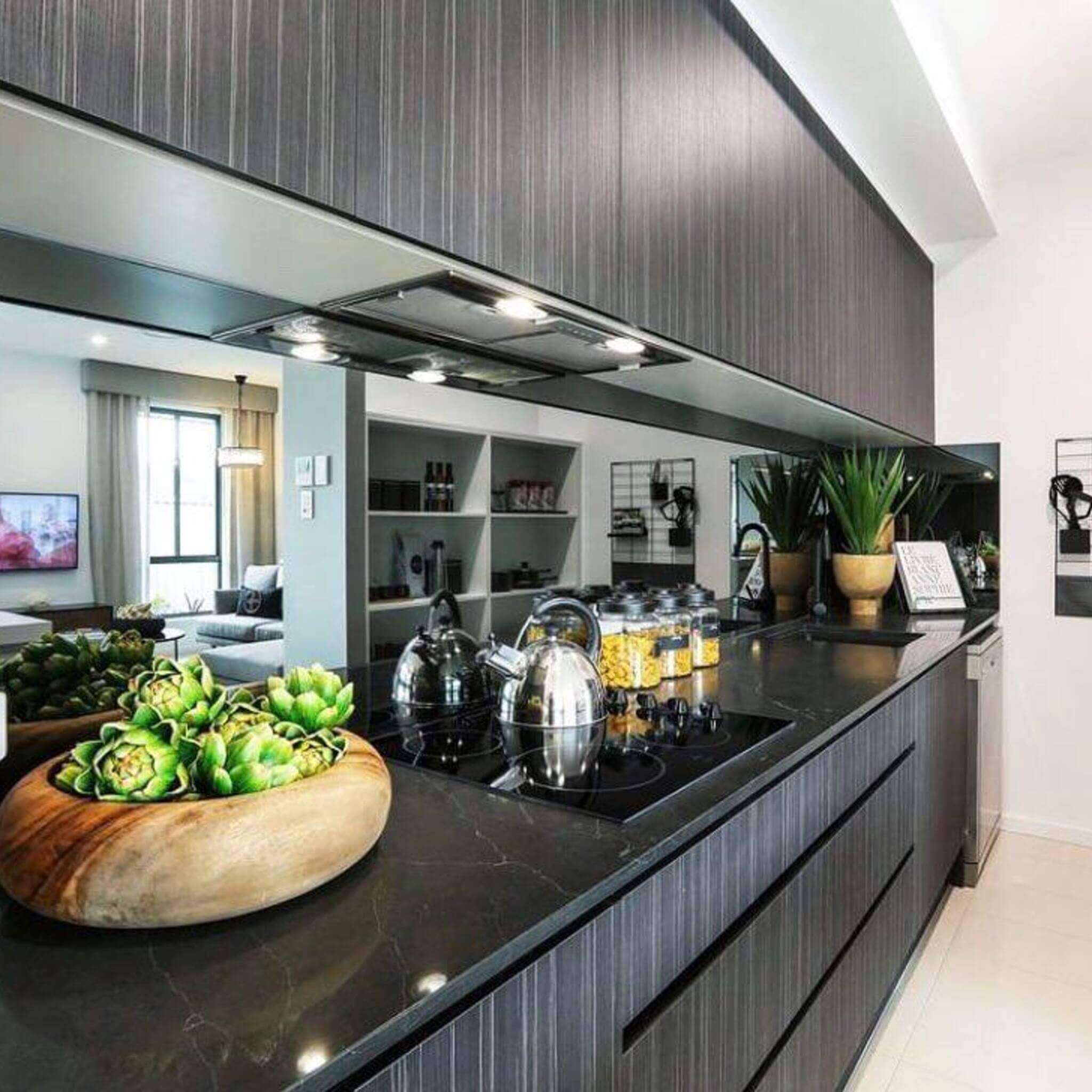
When designing a kitchen, there are countless decisions to make. From cabinet colors and flooring to hardware and lighting, every detail can affect the overall look of the space. But two elements often create the biggest design question: Does the kitchen backsplash match my countertop?
The short answer is not necessarily.
Your backsplash and countertop should work well together, but they do not have to be an exact match. In fact, using different materials, colors, or patterns can give your kitchen more personality and visual interest.
The key is finding the right balance.
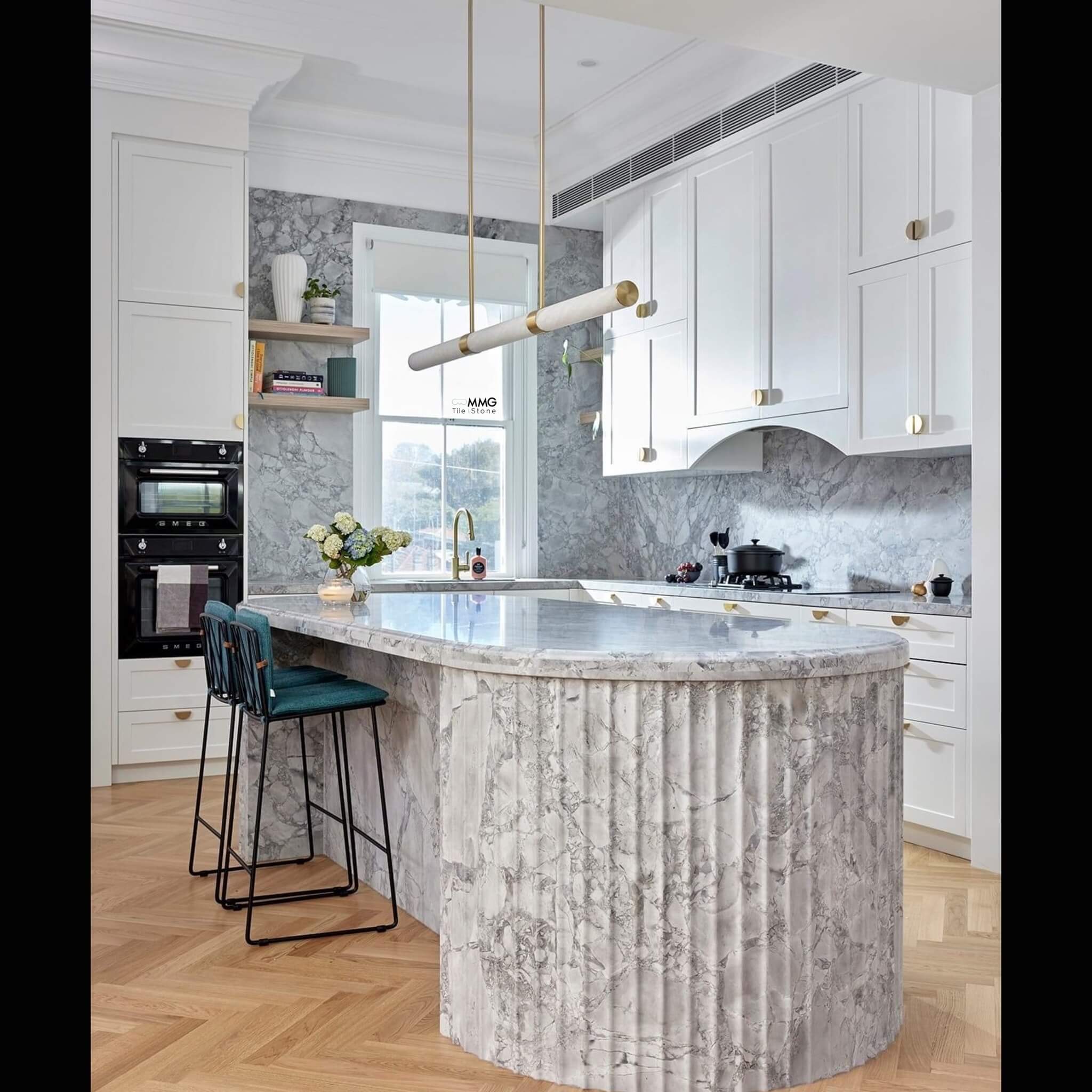
Should the Backsplash Match the Countertop?
Matching is one option, but it is not a rule. A backsplash can complement the countertop without being identical, allowing both surfaces to have their own visual character.
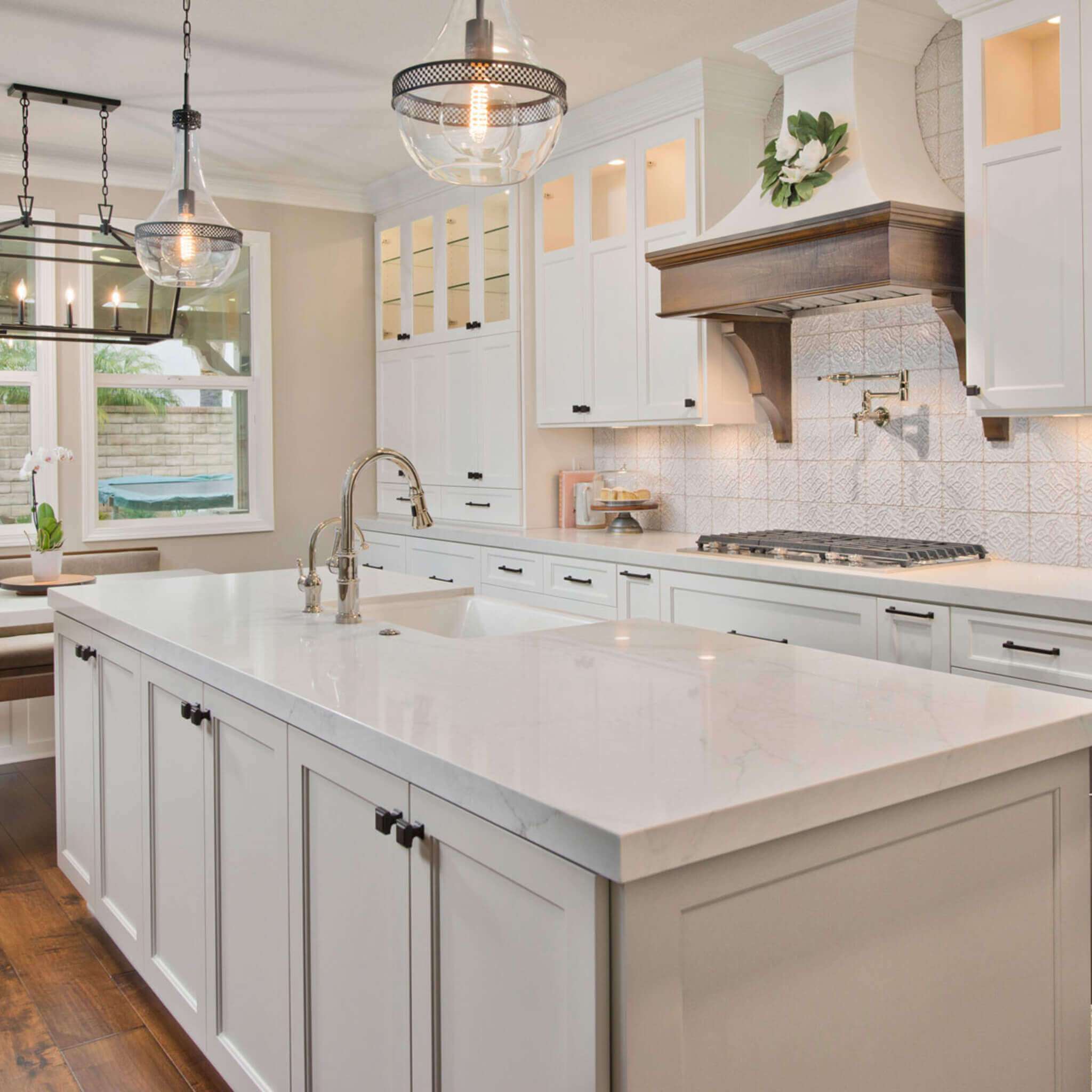
For example, a marble-look countertop with soft gray veining can work beautifully with a simple white subway tile backsplash. The backsplash does not copy the countertop, but the shared neutral tones create a cohesive look.
You can also reverse the approach. If your countertop has a simple, solid appearance, the backsplash can introduce more pattern or texture, giving the wall more visual interest.
The choice ultimately depends on the look you want to create and how much distinction you want between the two surfaces.
4 Ways to Pair a Backsplash With Your Countertop
The way you combine backsplash tile and countertop materials can shape the kitchen’s overall appearance. Consider the colors, patterns, finishes, and visual weight of each surface before making your final selection.
1. Choose Similar Colors
One of the easiest ways to coordinate these surfaces is by selecting colors from the same palette.
A countertop with warm beige and cream tones could pair with:
✔ Cream-colored tile
✔ Warm white tile
✔ Beige stone
✔ Light taupe tile
The colors do not need to be identical. Slight differences can add depth while still keeping the kitchen visually connected.
Note: Choose glass backsplash tiles with smooth, easy-to-clean surfaces to make it easier to remove grease, food splashes, and everyday residue during routine kitchen maintenance.
2. Create Contrast
If both surfaces are too similar, the kitchen can sometimes look flat. Contrast can help define each area.
Consider pairing:
✔ Dark countertops with light backsplash tile
✔ White countertops with deep-colored tile
✔ Neutral countertops with patterned backsplash tile
✔ Light stone with darker grout
Contrast works especially well when one surface is relatively simple, and the other provides more visual interest.
3. Pick Up a Color From the Countertop
A countertop with multiple colors gives you an opportunity to choose a backsplash based on one of its secondary tones.
For instance, if a stone countertop features white, gray, and subtle blue-gray veining, you could select a backsplash that highlights the blue-gray shade.
This approach creates coordination without making the backsplash look like an exact extension of the countertop.
4. Mix Patterns Carefully
Patterned countertops and patterned backsplashes can work together, but both surfaces need to be considered carefully.
If the countertop has dramatic veining or movement, a simpler backsplash may provide better balance. On the other hand, a relatively plain countertop gives you more freedom to use geometric, textured, or decorative backsplash tile.
A useful rule is to let one surface take the lead while the other supports it.
Should You Use the Same Material?
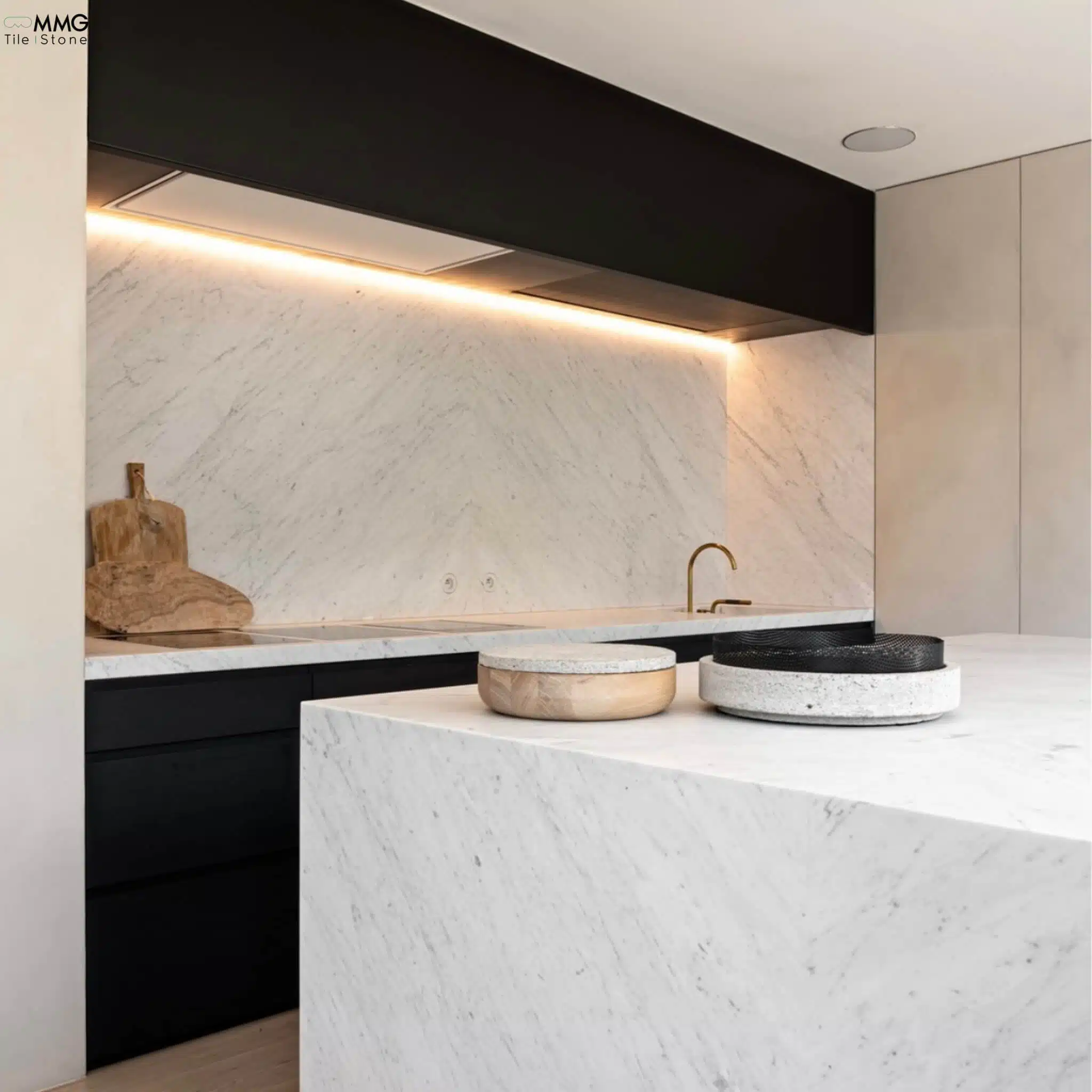
Using the same material for the countertop and backsplash can create a clean, continuous appearance. For example, extending a stone countertop material up the wall can give the kitchen a more seamless and polished finish.
This approach works particularly well when you want the countertop material to remain the main feature of the kitchen. It can also reduce the number of competing surface details, making the overall design feel more streamlined.
Using the same material does not mean the entire backsplash has to look identical to the countertop. The material can be used selectively or in a different format to add subtle variation while maintaining a consistent finish.
Related Articles:
What Type of Tile Is the Best Tile for Hospitals
What Types of Tiles Are Used for Commercial Buildings
How to Select Pavers for Residential and Commercial Projects
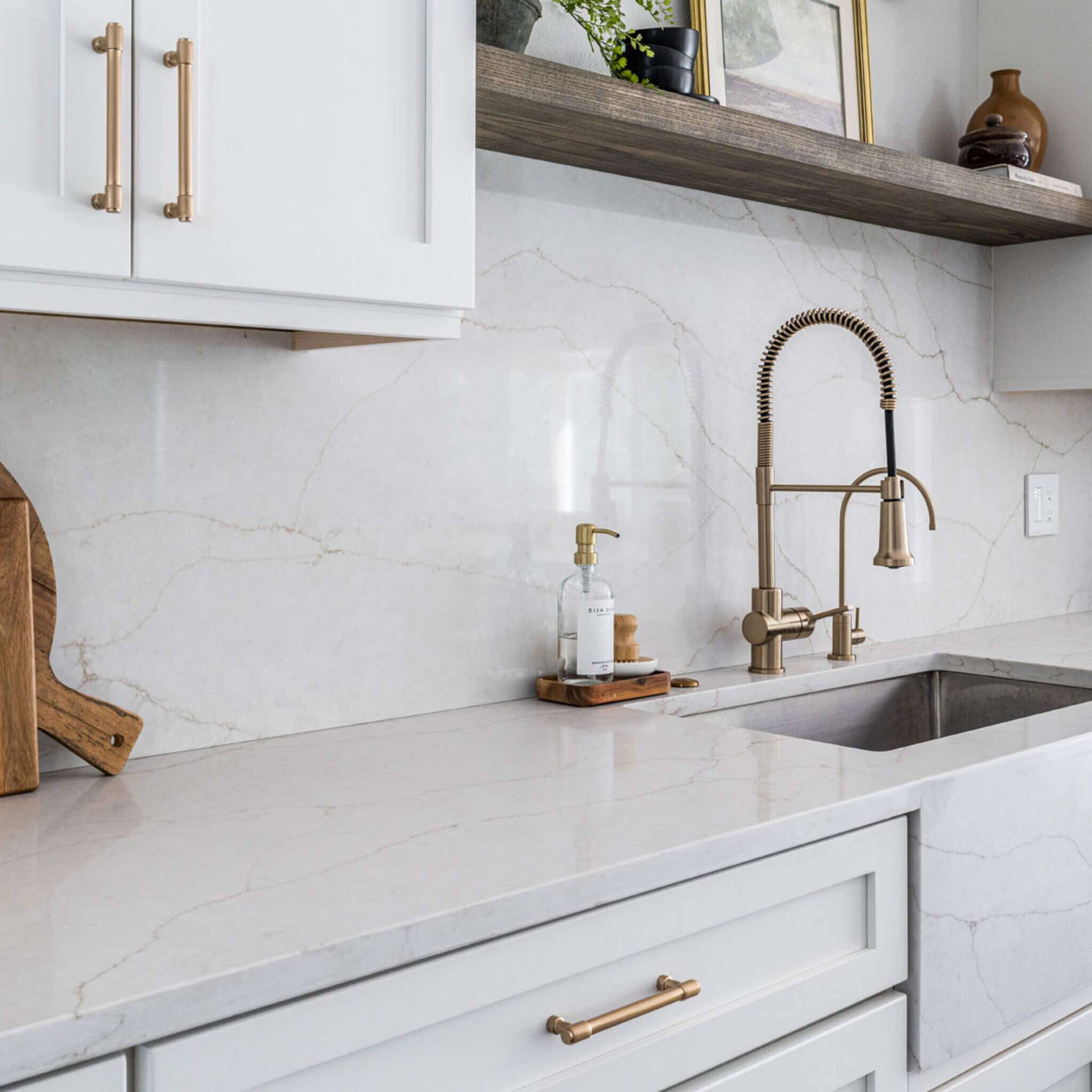
Can’t Decide Between Matching or Mixing Your Kitchen Surfaces?
Find the right combination with MMG Tile & Stone’s selection of marble, porcelain, ceramic, natural stone, mosaics, and slabs. For countertops, options include porcelain slabs, travertine, onyx, quartzite, granite, limestone, and Vadara quartz. Order $1 samples to compare colors, patterns, and finishes before making your choice.
With 25,000+ happy customers, quality-checked materials, and more than 1,000 types of natural stone, MMG has been helping customers source quality surfaces since 1990. Industry professionals can also benefit from the MMG Trade Program, including discounted pricing, free samples, and a dedicated representative.
Take 10% OFF your first order and start finding the materials for your kitchen.
What About Grout Color?
Grout can change how a backsplash looks alongside the countertop. A grout color close to the tile creates a more seamless appearance, while contrasting grout makes the tile pattern more noticeable.
For example, white tile with white grout creates a softer look. The same tile with darker grout produces stronger definition between individual tiles.
When choosing grout, consider both the backsplash tile and the tones found in your countertop. Even a small connection between the two can make the overall combination feel intentional.
How Does Kitchen Style Affect Your Choice?
Your overall kitchen style can also guide the combination.
✅ Modern kitchens: Simple tile shapes, large-format surfaces, and restrained color combinations can complement sleek countertops.
✅ Traditional kitchens: Classic subway tile, natural stone, and softer color palettes can work well with traditional countertop materials.
✅ Contemporary kitchens: A combination of bold patterns, textured tile, and contrasting surfaces can create a more distinctive look.
✅ Minimalist kitchens: Keeping both surfaces within a limited color palette can maintain a clean appearance without making them identical.
Do Finishes Need to Match?
Not necessarily.
A polished countertop can work with a matte backsplash, while a honed stone countertop can be paired with a glossy tile. Differences in finish can actually help separate the surfaces while keeping the color palette connected.
Instead of trying to make every surface identical, consider how light will interact with each material.
Glossy surfaces reflect more light, while matte and textured finishes create a softer appearance.
Final Thoughts
Your kitchen backsplash does not need to match your countertop exactly. The strongest combinations often use coordination rather than duplication.
Look at the colors, veining, patterns, textures, and finishes of both surfaces before making a decision. If one element is bold, consider keeping the other more restrained. If your countertop is simple, you can use the backsplash to introduce more character.
Most importantly, choose materials that work together with the cabinets, flooring, lighting, and overall kitchen style. A well-balanced combination can make both the countertop and backsplash stand out for the right reasons.