


When selecting a new floor for your home, the material is only part of the decision. The pattern you choose can significantly influence the overall look, feel, and character of your space. Among the most popular wood flooring layouts today are the chevron and herringbone flooring patterns. Both offer timeless elegance, visual interest, and a luxurious appearance, making them popular choices for homeowners, interior designers, and architects alike.
However, while Chevron and Herringbone may appear similar at first glance, they differ in ways that can impact your home’s style and atmosphere. Understanding these differences can help you make the right choice for your space.
In this guide, we’ll explore the characteristics, benefits, and design considerations of both flooring patterns to help you decide which one best suits your home.
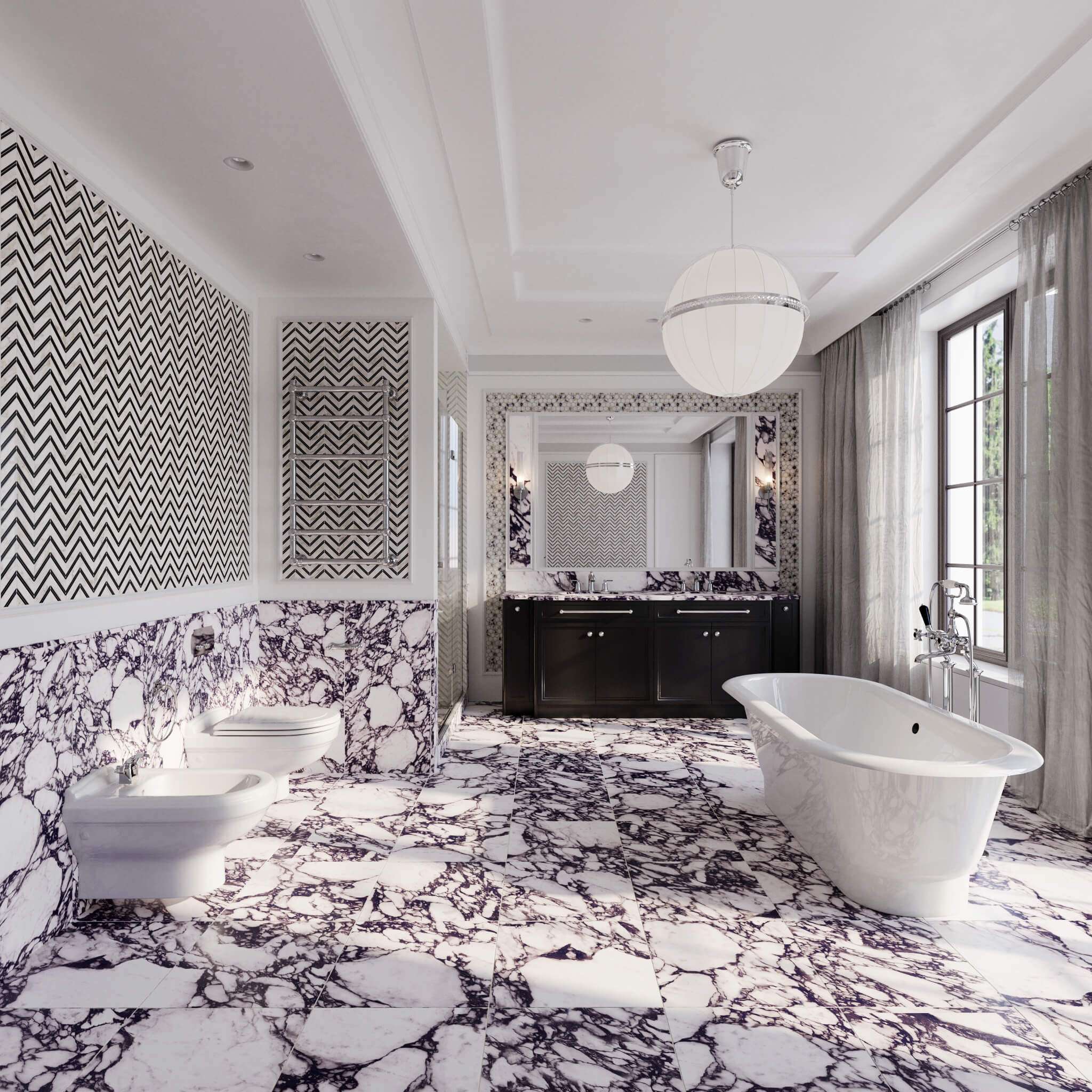
What Is Chevron Flooring?
Chevron flooring is characterized by planks cut at an angle, typically 45 degrees, that meet to form a continuous “V” shape. The ends of the boards align perfectly, creating a seamless zigzag pattern that draws the eye across the room.
This pattern originated in European palaces and has become synonymous with luxury, sophistication, and modern elegance.
Benefits of Chevron Flooring
✔ Creates a clean and continuous V-shaped design
✔ Offers a sleek and contemporary appearance
✔ Adds movement and visual flow to a room
✔ Commonly used in luxury homes, hotels, and upscale commercial spaces
✔ Works well with both modern and transitional interiors
The symmetrical lines of Chevron flooring can make a room feel more dynamic while maintaining a refined and organized appearance.

Check Out Our Chevron Flooring Tiles:
Chevron Elegance Grey Silky 4×16 Matte Wood Look Porcelain Tile
Essence Montauk Black Chevron 3D 7.44×12 Matte Porcelain Mosaic Tile
What Is Herringbone Flooring?
Herringbone flooring consists of rectangular planks arranged in a staggered zigzag pattern. Unlike Chevron, the planks are not cut at an angle. Instead, each plank is placed at a 90-degree angle to the next, creating a woven appearance.
This pattern dates back centuries and has been widely used in European architecture and design. Today, it remains a favorite for homeowners seeking timeless elegance.
Top Features of Herringbone Flooring
✔ Features a broken zigzag pattern
✔ Creates a classic and traditional look
✔ Adds texture and visual depth
✔ Suitable for both traditional and contemporary homes
✔ Works beautifully in living rooms, hallways, and dining areas
The intricate arrangement of herringbone flooring adds character and craftsmanship to any space, making it a versatile design choice.

Check Out Our Herringbone Flooring Tiles:
Celestial Herringbone 0.25×2 Glass Glossy Mosaic
Nero Marquina Herringbone 1×3 Honed Marble Mosaic
Chevron vs Herringbone: Visual Differences
Quick Summary
Choose Chevron flooring if you want a modern, streamlined look with strong visual flow.
Choose herringbone flooring if you prefer a timeless, textured pattern that adds character and classic elegance.
Quick Tip: Not sure which tile finish to pick? “Matte vs. Glossy Finish Tiles: Which is Best?” explains differences in look, care, slip-resistance, and long-term performance.
Which pattern suits which space?
Choosing between chevron and herringbone also depends on which room you’re flooring. Here’s a breakdown of what works best where and why.
Living room
Chevron creates a bold focal point in large, open living rooms. Herringbone adds warmth and texture in cosier, traditional spaces. Choose based on your interior style.
Hallway
Chevron’s strong directional lines draw the eye forward, making narrow hallways appear longer and more spacious. A popular choice in luxury homes.
Kitchen
Herringbone’s intricate layout adds character to kitchen floors without overwhelming the space. Easier to install and maintain around islands and cabinets.
Bedroom
The softer, textured look of herringbone feels warm and calming — ideal for a restful bedroom. Chevron can feel too dynamic in a space meant for relaxation.
Dining room
Herringbone’s classic appeal complements dining rooms with a timeless elegance. It pairs beautifully with wooden furniture and traditional décor.
Open-plan spaces
Chevron’s seamless V-pattern flows naturally across large, open-plan areas, giving the space a cohesive, contemporary look.
Related Articles:
Why Calacatta Viola Porcelain Tile Is Trending in 2026
What Are the Best Tiles for an Outdoor Staircase?
How Much Does It Cost to Tile a Bathroom Floor?
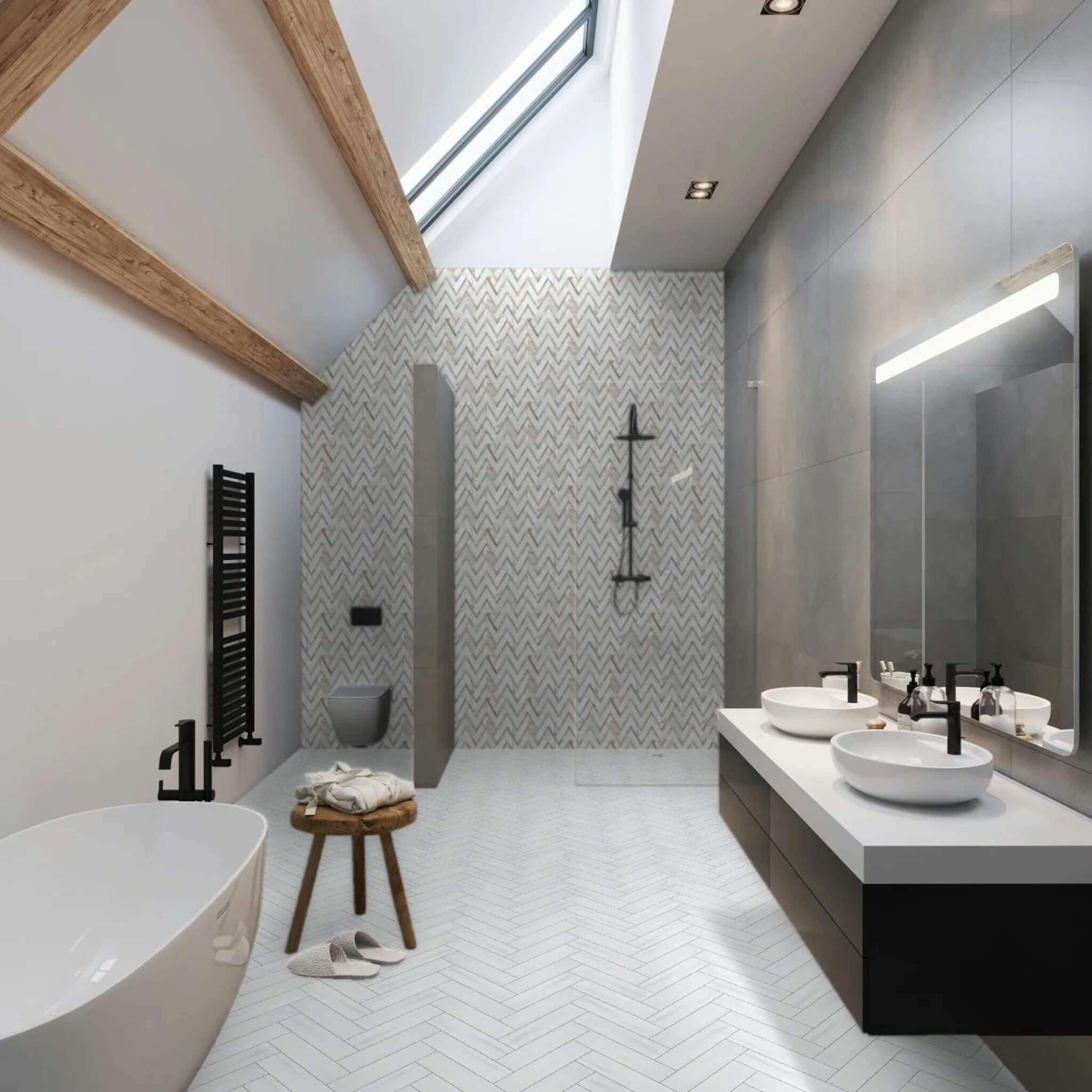
Browse Our Full Range of Wood Flooring Patterns
Now that you know the difference between chevron and herringbone, the next step is finding the right floor for your space. At MMG Tile & Stone, we carry a carefully curated selection of engineered hardwood flooring in both patterns, available in a wide range of wood species, finishes, plank widths, and tones to suit every interior style.
Whether you are drawn to the sleek, modern lines of chevron or the classic warmth of herringbone, our collection has options for every taste and budget. Each product is sourced with strict quality control to ensure lasting beauty and durability in your home.
Not sure where to start? Order a $1 sample and see how it looks in your space before you commit. Our flooring experts are also available to guide you in our Elkridge, MD, showroom or over the phone.
Shop Wood Flooring Book an Appointment
Chevron vs. Herringbone Flooring: Which Pattern Is Right for Your Home?
Both chevron and herringbone are timeless choices that can elevate any space. Chevron suits modern, open interiors where you want bold visual flow, while herringbone fits traditional and transitional homes with its classic, textured charm.
The right pattern comes down to your room size, interior style, and budget. Either way, you cannot go wrong; both patterns bring lasting elegance to your home.